It is not every year that we have the chance to influence the accountability of the highest court in the United States. In these first months of 2023, KCBA has played a major role in moving the nation forward in demanding that its highest court take steps to protect its integrity.
In my column last month, I mentioned that KCBA passed a resolution that the Supreme Court of the United States must have a binding code of ethics. On February 6, 2023, we presented a similar resolution to the American Bar Association House of Delegates.
Like most people who hear that the Supreme Court doesn’t have a code of ethics, I was surprised. Essentially every judge in every jurisdiction in the United States — city, county, state, tribal, territorial, and federal — is subject to a binding code of ethics that embodies basic judicial ethical precepts with enforcement mechanisms. Justices of the United States Supreme Court are not. How can the highest court in the United States have no code of ethics?
After the national delegates fiercely debated the Resolution — argued by our very own James Williams who leads the Washington delegation in the ABA House of Delegates and was KCBA’s opening proponent speaker — it passed overwhelmingly. ABA adopted our Resolution that SCOTUS should adopt a binding code of ethics. It was indeed a momentous occasion — which took the combined heavy lift of many people who saw an opportunity for historic change.
You can learn more about that debate from Mr. Williams in his piece for our Bar Bulletin at page one.
Subsequent days have been some of the most exciting ones for KCBA. Our Resolution has been making nationwide press. The New York Times, Washington Post, Huffington Post, ABA Journal, and many others quoted from our Resolution, highlighting the court’s inability to create its own code of ethics. There is no doubt that KCBA is making waves.
Here is a brief summary of how the Resolution came about. The idea arose when national legal hero and KCBA member Llew Pritchard was honored at an ABA Center for Human Rights luncheon last summer. ABA President Deborah Enix-Ross and President-Elect Mary Smith were among those who gathered in Seattle to celebrate Llew, a founder of the Center for Human Rights and an honorary recipient of the Center’s Eleanor Roosevelt prize. At this event, Llew expressed his deep concern about the lack of ethical standards in the legal profession and the lack of a code of conduct at the Supreme Court. 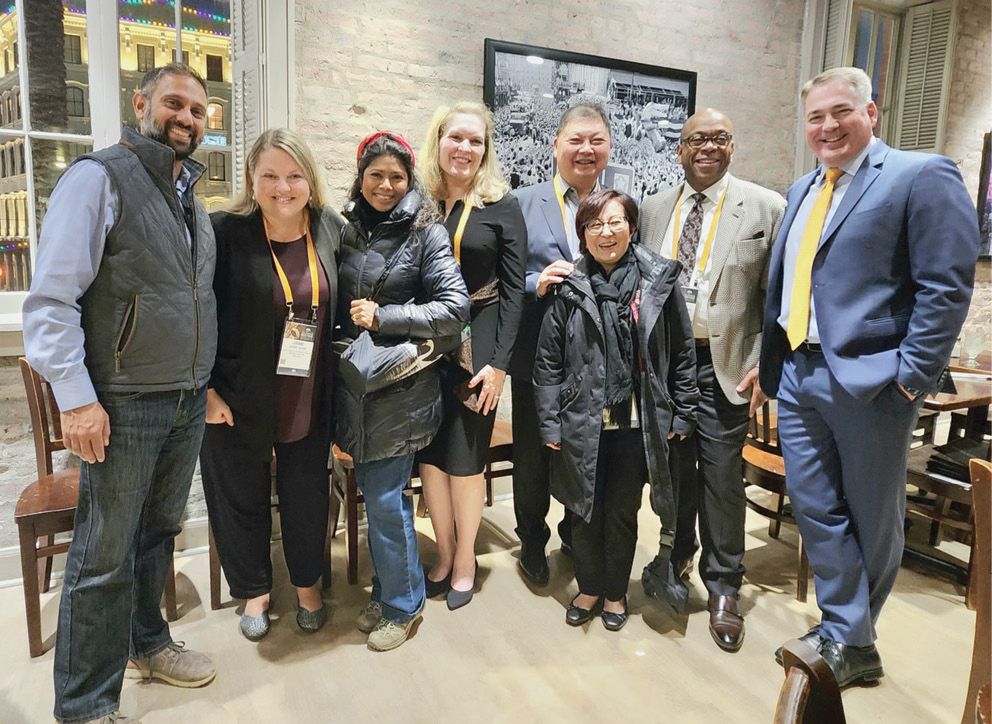
A few months later, KCBA’s own delegate to the ABA House of Delegates, Kathleen Hopkins, an expert of ABA policy and procedure, suggested to our KCBA Board that it pass a resolution that SCOTUS adopt a binding code of ethics. She knew we had an opportunity to make an impact both locally and nationally at the ABA midyear meeting.
The KCBA Board, which includes incredible lawyers, gave Kathleen the green light to move ahead. Kathleen led the charge and asked KCBA member Tom Fitzpatrick and an ethics expert, Lucian Pera, to assist in drafting the resolution. Tom, who had been one of the drafters of the ABA’s model code of judicial conduct (which bind all federal judges except the Supreme Court justices) drafted the resolution and the accompanying report. Lucian, who is also nationally recognized, drafted various ethics and judicial codes, then assisted with the national negotiation and redrafting of the resolution and supporting report, during the fall and winter.
Things became a little frantic as we entered the holiday season and the ABA midyear meeting loomed just a few weeks away. The team sought guidance and assistance from ethics experts from up and down the country, including guidance from the chair of the ABA coordinating counsel on the ABA’s Center for Professional Responsibility, and a recent poll conducted by the National Judicial College which reflected that the vast majority of this country’s judges want Supreme Court justices to be bound by a code of ethics, just like all other judges in this country. Our team then worked closely with the ABA to ensure they followed ABA procedures for meeting drafting rules and deadlines of submissions for the February meeting.
On January 18, we passed our KCBA Resolution. We also approved a resolution to present at the ABA meeting, and our report explaining why a binding code of ethics for the Supreme Court is so necessary.
The days leading up to the House of Delegates ABA midyear meeting were an extraordinary education in ABA policy and procedure — and dare I say, politics. The key issue of contention in our resolution became whether the ABA would call for a “binding” ethics code — which would come with a set of consequences for justices who violate it — or whether the resolution should omit the word “binding.” ABA committees whose support we needed, opposed including this word.
KCBA Trustee Neal Black stepped in to be our delegate to move the Resolution at the meeting in New Orleans. As a result, he handled much of the email debates requesting us to remove the word “binding.” Our team was steadfast in their determination to keep this word in our Resolution.
On the day of the debate, it was not certain how this would end. But Mr. Williams delivered one of the most consequential supporting speeches of the ABA. He was passionate and unwavering, and I would urge you to watch the video of his delivery and the debate.1
The Resolution passed with an overwhelming majority of the 592-person body of the ABA House of Delegates.
None of it would have been possible without the vision and leadership of Kathleen Hopkins, Tom Fitzpatrick, Lucian Pera, James Williams, Neal Black, Mark Schickman, Lorelie Masters, and past ABA-President Patricia Refo. We owe so much gratitude to this star team.
So, what now? Why is this important? Through this process, I learned that the ABA cannot take a position on any matter unless there is an adopted resolution. Now that the ABA has a resolution it can take action.
Next steps could include, for example, the ABA’s drafting such a code, supporting other organizations drafting such codes, or taking a position on pending efforts by Congress to impose its own code of ethics on SCOTUS. The Resolution is profoundly impactful.
I am so grateful to have experienced this moment as the President of KCBA. When I wrote my book Legal Heroes in the Trump Era, I was very concerned about the lack of ethics in the legal profession. I was concerned that lawyers were using their credibility and clout for the wrong things. But I always believed in the values of our founders of KCBA — that lawyers must use their powers for the good of society and to protect the rule of law. Over a century later, KCBA lawyers continue to do that. And boldly lead where others are afraid.
If and when there is a code of ethics for the justices of the Supreme Court of the United States, it will be because we initiated the process.
Congratulations to KCBA, the star team that made this resolution possible, to the board members who were unafraid to lead, and to all members.
Notes: In my last column, I had a typo. Congratulations to Daniel Hsieh for his leadership of the MLK luncheon committee.


