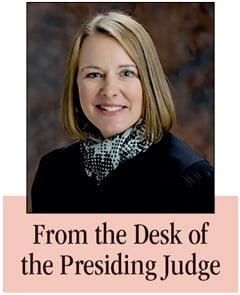
 One County, One Court System, One Community
The Seattle area has always been a community that looks outward.
We are a metropolitan area shaped by water, commerce, innovation, and the movement of people from every corner of the globe. Our history is one of connection — between communities, cultures, and ideas. This summer, that spirit has been on full display as Seattle welcomes the world for the FIFA World Cup.
For a few extraordinary weeks, our region has been a gathering place for players, coaches, families, journalists, and fans representing nations from across the globe. Languages from every continent are flowing in our streets. Flags fly. Friendships blossom between people who may have little in common except a love of the beautiful game. I — a Sounders fan — enjoyed the USA vs. Australia match in Pioneer Square with my brother, my nephews, and a rival Timbers fan from Portland sitting next to us. We united in our joy, talking soccer.
The World Cup is, of course, a celebration of sport. But it is also something more. It is a celebration of community.
That observation led me to reflect on the value of community building right here in our county. The work of the King County Bar Association and the King County Superior Court is central to creating a community that supports and sustains our justice system. Our courts serve as a gathering place for people from every background and every walk of life.
At first glance, the comparison may seem unlikely. World Cup stadiums are filled with cheering fans. Courtrooms generally are not. Soccer supporters are encouraged to wear team colors. Judges favor black robes and neutral courtroom dress. One venue rewards dramatic celebrations; the other not at all.
Yet beneath those obvious differences, a shared principle exists.
Both depend upon the idea that people with different interests, backgrounds, and perspectives can come together under a common set of rules and trust that those rules will be applied fairly.
That idea is fundamental to sports. It is also fundamental to justice.
Every day, the King County Superior Court welcomes individuals whose experiences reflect the remarkable diversity of King County. They come from different cultures, speak different languages, practice different faiths, and bring different life experiences to the courthouse.
Some arrive as litigants. Some as jurors. Some as witnesses, family members, attorneys, or members of the public. What they share is the expectation that they will be treated with dignity, respect, and fairness.
Meeting that expectation is among the judiciary’s most important responsibilities.
Our justice system is strongest when every participant feels that they have been heard. Fairness requires more than impartial decision-making. It also requires meaningful access. A person who cannot understand court proceedings because of a language barrier is not fully participating in the process. A litigant who feels excluded because of cultural differences may reasonably question whether the system is serving them.
For that reason, King County Superior Court devotes daily effort to implementing rules and procedures transparently and consistently, improving language access, offering accommodations, and strengthening confidence in the administration of justice.
These efforts are not peripheral to our mission. They are central to it.
You — the members of this legal community — help us on our constant march toward fully realizing these aspirations. You understand, also, that courts need the resources necessary to deliver justice. Increasingly, our mission requires technological investment, support for handling growing accommodation requests, and resources to efficiently move cases forward. Public trust is built one interaction at a time. It is built when we timely resolve a pending motion. It is built when a juror feels respected. It is built when a litigant understands a ruling. It is built when community members see that the courts are committed to serving everyone, not merely those who are most familiar with legal institutions.
The legal profession plays a critical role in our courthouse community. I want to thank KCBA members who have taken the time to talk with me at a Town Hall and who have reached out separately. Learning how you experience our court system helps me collaborate within the courthouse for better service and attention to our customers. Regular meetings with the KCBA, including leaders such as Executive Director Kathleen Jensen, outgoing President Sidney Tribe, and incoming President Mary Sakaguchi, are mutually beneficial and enhance the Court’s work.
In addition to partnering with the courts, attorneys also serve as guides. Our bar helps litigants understand unfamiliar procedures, navigate difficult circumstances, and translate legal concepts into practical advice.
Just as no team can advance through a sports tournament based on individual talent alone (yes, even Argentina), the Court’s success in serving our community depends upon collaboration, preparation, discipline, and trust from numerous public servants. Judges may be the most visible representatives of the judicial branch, but the administration of justice depends upon many others. Court staff, commissioners, interpreters, clerks, bailiffs, jurors, attorneys, and community partners all contribute to the fair and effective operation of the court system. As Seattle hosts visitors from around the world, so, too, do our employees answer questions, provide directions, and help court users feel welcome in our courthouse community. The World Cup reminds us of the importance of teamwork.
Like a championship-caliber team, we must never assume the work is finished. We must continue to learn, improve, and adapt to meet the needs of our diverse and changing community. We must recognize where we fall short and where our resources run the thinnest. When necessary, we must go back to the playbook and draw up new plays to realign our resources.
As Seattle welcomes the world, let us celebrate not only a global sporting event but also the values that make such events possible: fairness, inclusion, respect, and community. The tournament works precisely because it brings together people who are different. The event succeeds because those differences are welcomed within a framework of mutual respect and common rules. Those are values worth cheering for.
It is remarkable to see a sports tournament create a feeling of international joy and belonging through the love of a game. As members of the legal profession, we too can create a sense of belonging through our dedication to justice and the rule of law.
As Seattle opens its arms to the world, I am reminded that the magic of a global tournament isn’t just the goals scored — it’s the way shared rules and mutual respect transform a community and bring individuals together. Our courthouses are no different. If the World Cup can knit together thousands through a love of the game, then surely we can continue building a justice system that unites our own community with the same spirit and commitment: one interaction, one decision, and one act of dignity at a time.


