By Robert C. Boruchowitz
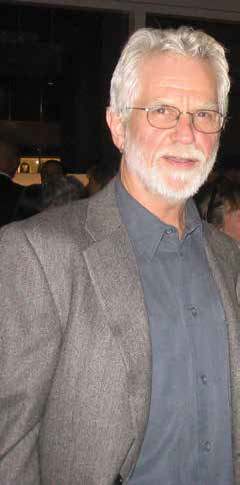
University of Washington Law Professor John Junker died in August, just shy of age 91. He had a deep and long-standing impact on criminal law in Seattle and Washington more broadly, both as a teacher and as an advocate. He was a champion of justice who will be missed.
In his 45 years of teaching criminal law and criminal procedure beginning in 1964, Professor Junker inspired generations of students.
He was a key member of a “blue ribbon” task force that led King County to contract with The Defender Association, a nonprofit corporation, to provide public defense to be responsive to, but independent of, political influences, in 1970. John became a member of the Defender Board. In that role, when there was a vacancy in the director’s position, John persuaded the Board that I should be the second choice for the job. As a 29-year-old staff attorney, I was a dark horse, and I am not sure the rest of the Board gave a lot of thought to John’s motion. After the first-choice person, a defender in Ohio, declined, John was able to hold the Board to that determination and I became director.
John was key in the development of The Defender Association and as a Board member, he was vitally important in helping me when I became the director and for years afterward. He was a great advocate for our office and our clients. And we had lively Board meetings when John was there.
I shared the sad news of John’s passing with my former deputy and my good friend, retired Judge Jim Doerty, and learned from him that John was key in helping JD decide to become a defender. John inspired him to choose criminal law, and his endorsement helped JD obtain the scholarship that got him through the third year of law school.
John could be a bit of a character. Judge Doerty recalled that John was “very fond of saying, ‘Law school sharpens your mind by narrowing it to a fine point.’” He noted that John became an accomplished musician in midlife, learning the flute. JD said that John became interested in sports cars but relatively quickly abandoned that and sold JD his 1963 Austin-Healey roadster.
Professor Junker inspired both defenders and prosecutors. Dan Satterberg, former King County prosecutor, said, “He kept it real, had opinions, and was one of my favorite professors. He had an impact on me throughout my professional career as a prosecutor.”
John was the principal drafter of the Revised Washington Criminal Code, which was enacted as Title 9A of the RCW in 1975.
John served on many committees at the law school and the university, including serving as chair of the Faculty Senate. Professor Mike Townsend remembered Professor Junker “as a person not afraid to speak to power on behalf of those not in a real position to do so. I saw this reflected in his scholarly pursuits, particularly those related to the death penalty, which is perhaps the ultimate exercise of power by the state, and also in the conduits through which he spoke, as for example in his service as Faculty Senate Chair.”1
John was a major advocate for public defense before he joined the Defender Board. He wrote a key article in 1968 that Justice Richard Sanders quoted decades later in dissent: “it is imperative that petty offenders be apprised of the same rights as felony defendants.”2
In 1969, three years before the U.S. Supreme Court decision in Argersinger, making clear the right to counsel in misdemeanor cases, John argued for that right to counsel in the Washington Supreme Court. The Court decided 5-4 against the right to counsel in municipal court.3 The Court said that the accused person could appeal to the superior court, which at its discretion, considering the person’s youth, inexperience, or physical or mental disabilities, could appoint counsel.
There was a strong dissent and, of course, that decision was later overruled.
John strongly opposed the death penalty and won reversal of a death verdict in 1970 in Hawkins v. Rhay, in which the Washington Supreme Court found errors in the jury selection and required that the death penalty decision be unanimous.
At John’s memorial Oct. 19, friends, family, and colleagues from across the country filled the Mt. Baker Community Club, heard moving stories about John’s family, his work, and his love of gardening and animals, and saw a slideshow of photos prepared by his daughters. John’s flute teacher played John’s favorite piece.
The gathering learned details about John’s upbringing. His parents were Danish immigrants who met in Seattle and moved to St. John’s near Vancouver, Washington. John had a tough childhood, including two years at the Children’s Farm Home in Corvallis when his parents had health problems that prevented them from caring for their children. He credited the teachers there with teaching him to read well.
He got his first job at age 8 as a paperboy. He did well in school until he found it boring and dropped out in ninth grade. He joined the Army, where he got his GED. He attended college with the GI Bill, first at Clark College in Vancouver, Washington, and then at Washington State University. He went to the University of Chicago Law School, where he was a managing editor of the Law Review.
John clerked for California Supreme Court Justice Roger Traynor. He opened a small practice in San Diego for a short time before moving to Seattle to teach at UW.
John created a popular course on white-collar crime. Professor Stewart Jay told the memorial gathering that John was an excellent teacher and a great colleague who was modest about his accomplishments.
John’s family recounted that in his retirement years John was a proud father, a flute player, and a talented gardener who happily fed crows and played with dogs. He was a runner and racquetball player and, eventually, a walker around the Mount Baker and Leschi neighborhoods where he lived for almost 50 years.
John is survived by his wife, Edith Wolff; his prior wife Sharon Burrows; and his children: Margaret Wolff, Sally Wolff, Carol Junker, Jorgen Junker, Andrew Junker, and Gretchen Junker.
I could always count on John for thoughtful advice and for fervent advocacy. May his memory be for a blessing.
Robert C. Boruchowitz is a Professor from Practice and director of the Defender Initiative at Seattle University School of Law. He was director of The Defender Association for 28 years.
1 The University of Washington published an obituary at https://law.uw.edu/news-events/news/2025/john-junker.
2 City of Seattle v. Guay, 150 Wn.2d 288, 305, 76 P.3d 231, 239 (2003), citing John M. Junker, ”The Right to Counsel in Misdemeanor Cases,” 43 Wash. L.Rev. 685, 705 (1968) (quoting In re Gault, 387 U.S. 1, 28(1967)).
3 Hendrix v. City of Seattle, 76 Wn.2d 142, 165, 456 P.2d 696, 711 (1969), overruled by McInturf v. Horton, 85 Wn.2d 704, 538 P.2d 499 (1975).


