The first courtroom Darrah Hinton ever stepped into was not in a courthouse at all. It was a peer-led youth court program in her home state of Alaska, where high school students prosecuted real cases involving their peers. She studied, sat for a “bar exam,” and even earned the program’s coveted Golden Gavel Award. More than a résumé line, this experience gave her an early taste of advocacy and the quiet certainty that the law could belong to her.
Darrah’s upbringing also offered lessons only Alaska could script. “Growing up in Anchorage, my version of ‘the dog ate my homework’ was ‘a moose blocked my car and wouldn’t move,’” she said, laughing. “That one was actually true. I missed school more than once because you don’t argue with a moose — you wait it out and hope your teacher believes you.”
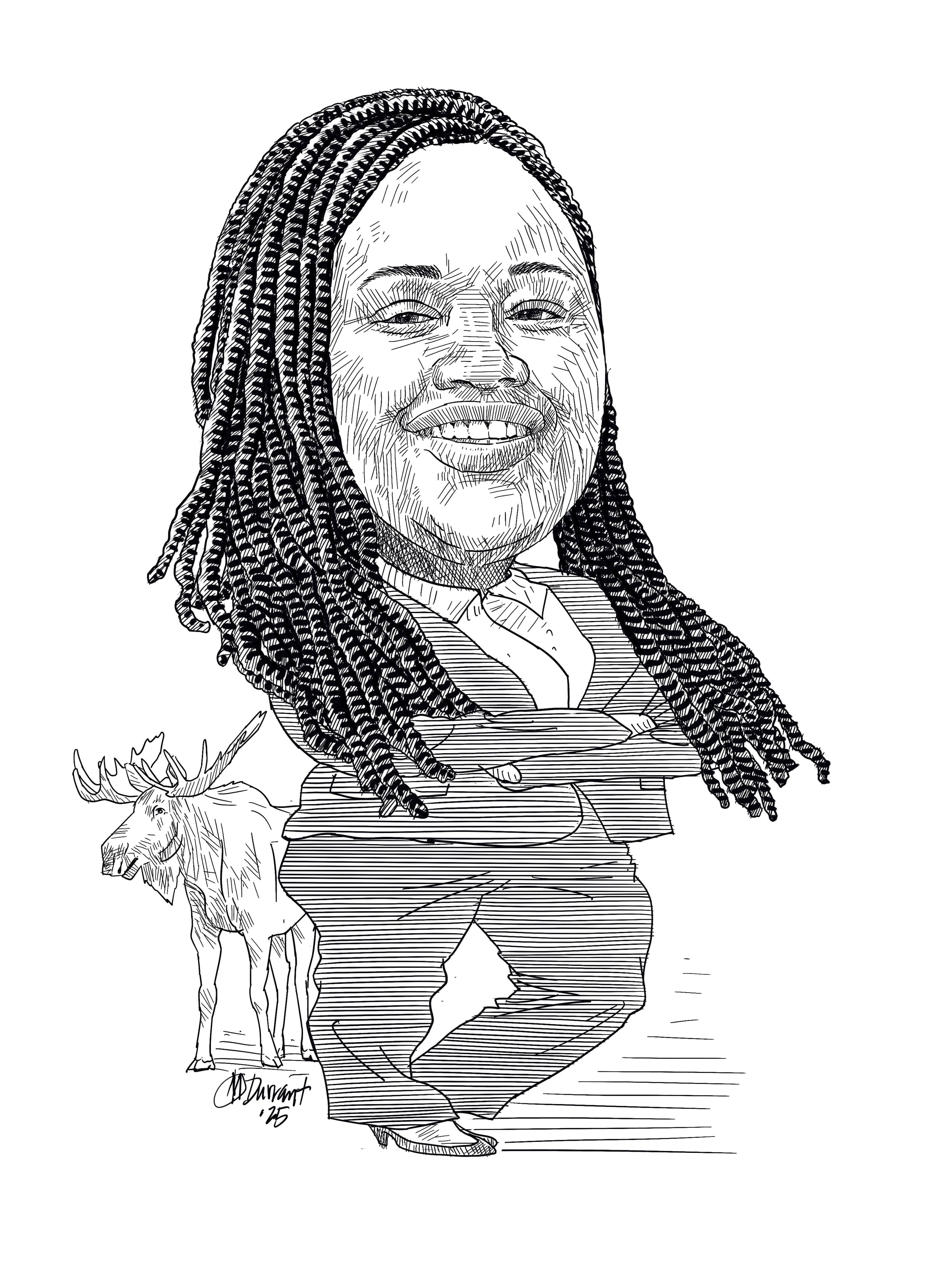 With time, the lightness of those early stories gave way to a deeper calling. After the murder of Trayvon Martin, the urgency to pursue the law settled in her bones and evolved into a profound sense of purpose. “That tragedy crystallized the need for lawyers committed to justice and equity,” she said. “It showed me that the law is a powerful tool for change, and I wanted to be part of that work.”
This realization led her to Seattle University School of Law, where she graduated in 2017. After earning her J.D., she began her career in public service as a prosecutor in Snohomish County, later moving to King County as a deputy prosecuting attorney. There, she tackled firearm violence through legal and public health lenses, developed community-based prevention programs, and handled felony cases. Amid this demanding work, she served as union president for the King County Prosecuting Attorney’s Association, advocating for colleagues in contract negotiations. Today, her focus has shifted to the private sector, but the throughline remains the same: problem-solving with purpose. At Davis Wright Tremaine, she helps businesses navigate labor challenges and defends employers in employment litigation, from wage-and-hour disputes to discrimination and harassment claims.
But to understand what drives Darrah’s grit and ambition, you have to start well before the law became her calling. As a child, she had a powerful role model in her mother, whose quiet resilience shaped the way Darrah saw the world. “My mom worked hard without complaint, showed up when the odds were stacked against her, and did it all with grace,” Darrah recalled. She also taught her to stand firm in spaces where her experience was the exception. Those early lessons shape how she practices law. For her, building relationships isn’t transactional and navigating complexity isn’t confusing. These skills are second nature because she’s practiced them her whole life.
What her mother modeled, her mentors reinforced. They showed her that real leadership means standing tall in discomfort when it would be easier not to, and that it’s less about having all the answers and more about presence, honesty, and inclusivity. “I hope the lawyers I’ve mentored remember me as someone generous with my time and honest with my advice — someone who was present, who cared deeply, and who didn’t take myself too seriously,” she said. Anyone fortunate enough to be mentored by Darrah would tell you that not only is this the case, but there is no one more effective at pulling up new chairs to the proverbial table.
For Darrah, advancing the law is not just a priority; it’s a mission. She challenges the profession to stop mistaking tradition for limitation, pushing it to recognize that excellence comes in many forms. Her goal is clear: break down barriers, build pathways for lawyers who defy the mold, and open doors that have been closed for too long. She already leads by example as president of the Loren Miller Bar Association, championing justice, equity, and the advancement of Black legal professionals in Washington.
This level of leadership demands stamina, and inside a large, high-
performing firm like Davis Wright Tremaine, she’s candid about what that takes. “I’d love to say I’ve figured out balance, but the truth is there’s no such thing,” she said. Juggling, for her, is less about perfection and more about intention, strong teams, and grace. “I prioritize what matters most, lean on the people around me, and try not to beat myself up when something has to give,” she added.
Outside of work, Darrah recharges by leaning into the things that bring her joy. “Sleep, music, and an embarrassing amount of reality TV,” she said with a smile. She also plays instruments, finding in music a creative outlet where nothing needs to be argued or defended, where clarity and peace come without pressure. And yet, that sense of grounding often finds its way back into her practice. The personal and the professional are not separate in her mind; they are different verses of the same song.
Darrah’s journey is not just one of achievement, but of a relentless drive to shape the law into something more just, more human, and more inclusive. From a youth courtroom in Anchorage to a career in Seattle defined by purpose and impact, she keeps moving the work forward and lifting people up with the same grit, clarity, and humor that helped her wait out a stubborn moose and later walk boldly into a profession that wasn’t built with her in mind, but that she is already transforming. Not because it’s easy. Not because it’s expected. But because she understands that the law is only as powerful as the people brave enough to bend it toward justice.
Joanna Plichta Boisen is chief pro bono and social impact officer at Davis Wright Tremaine where her day job is making good trouble, and her side hustle is writing about extraordinary people who inspire it.


