Nonfiction Book Recommendation — Hidden Potential:
The Science of Achieving Greater Things by Adam Grant
By Michael Goldenkranz
I should have known, because I read his prior book, Think Again: The Power of Knowing What You Don’t Know, that Adam Grant would have me questioning my assumptions, seeking out challenges, and developing my character traits.
Grant persuades people they can be great, even if they are not prodigies or naturally gifted athletes, students, or musicians. A prolific author, he is also a brilliant and engaging organizational psychologist at The Wharton School.
In this book, Grant couples his first-rate research on motivation with vivid and difficult backstories of folks who we just assumed were naturals. He then distills the scaffolding and tools they needed and that we can emulate — as individuals, team members, professionals, teachers, mentors, coaches, and parents — to help ourselves and others find potential and achieve goals that first seem out of reach. Ultimately, it’s about building character and developing values.
No, it’s not another self-help book on steroids. But it is a fascinating and practical read, one I wish I had sooner, for myself and to give the teachers and coaches I encountered through my kids and grandkids.
I was hooked from the opening story about the real-world equivalent of the Bad News Bears: the true story of Harlem’s own Raging Rooks junior high chess championship team and what it took for them to get there. It was not simply hard work, more drills, and longer hours. These weren’t young whiz-kid child prodigies who started at an early age, but their opponents were.
And then there’s that wild and crazy guy Steve Martin. He flopped big-time for years as a stand-up comic before “Well, excuuuse me!” Grant shines a light on this path as well.
This book is a who’s who of failures who later, some much later, made it by engaging far different approaches than one would expect, or than what they were previously doing. Just a few examples: NBA superstar Stephen Curry; knuckleball phenom R.A. Dickey; and Alison Levine, who completed the mountain climbing and adventurer’s Grand Slam despite medical conditions that tried to shut her down.
Each chapter explores achievers who, by typical standards, should never have come close to the forefront or mastered their goals or achieved their dreams. These stars failed miserably, multiple times, but found new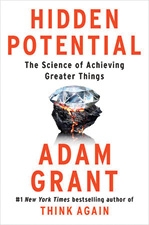 approaches, alternative support systems, and a fresh kind of coach or mentor.
When asking others for help, Grant offers a surprising recommendation: “Instead of seeking feedback, you’re better off asking for advice. Feedback tends to focus on how well you did last time. Advice shifts attention to how you can do better next time.”
Grant emphasizes that progress isn’t always a straight climb. It often happens in the “valleys we must cross,” and growth comes from learning to stay the course.
The book’s final part deals with how society can provide these windows of opportunity. Grant examines how can schools, the military, organizations, and employers can open doors and help people from a wide range of backgrounds reach their full capacities.
For example, you don’t have to be a polyglot with superhuman talent to master multiple languages. It helps to simply start engaging in conversations right out of the gate, when you’re at rudimentary levels, and simply allow for mistakes and corrections. Go with the flow. Refer to Grant about how to get over your shyness and do this.
Malcolm Gladwell read Hidden Potential in one sitting and had a fantastic discussion with Grant that you can stream.
I enjoyed a short leisurely chapter a day (with some days off) because it gave me pause — to think and wonder what it would have been like if I’d read this when I was much younger, which is what Serena Williams reportedly wondered too.
So, I’m sharing it with you. Especially those who are fresh out of law school, still relatively new in practice, parents of young kids or teens, mentors to associates, or new law-firm leaders. Or those who simply feel stuck or plateaued.
This potent book is a heck of an enjoyable jaw-dropping read, while assiduously researched, vetted, and footnoted.
This summer, or whenever you get to it on your list: May you discover your potential, and then share it with the rest of us.
Michael Goldenkranz is a retired curmudgeon who volunteers with the Neighborhood Legal Clinics and is (wishfully!) being coached by Adam Grant on how to become the silliest grandpa.


