 From the King County Superior Court Presiding Judge: Judicial Threats Are a Warning Sign for Civil Society
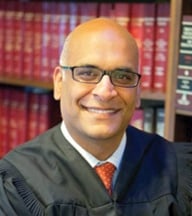
By Judge Ketu Shah
In May, over 300 attorneys came to the presiding courtroom in the King County Courthouse and re-affirmed their attorney oath for Law Day. In over 30 years around the courthouse, I have never seen that many people in one courtroom. It was a powerful voice in support of the rule of law. I thank all those who could make it and those who could not: I am sure you were there in spirit.
Lately, the rule of law has been in the news, and as part of that conversation there have been cries to impeach judges. Criticism of lawyers and judges is nothing new, but the clamor for impeachment has become so loud that even Chief Justice John Roberts took the extraordinary step of rebuking those calling for impeachment, pointing out that it is the appellate process, not impeachment, that is the appropriate avenue to challenge court rulings.
Meanwhile, many people feel when they lose a case, the judge must be biased or unfair. Because of these perceptions, many of these judges have received what the U.S. Marshals Department considers serious threats. In his 2024 Year End Report on the Federal Judiciary, Chief Justice Roberts commented that threats against federal judges have more than tripled in the last decade.
The vilifying of judges can have real-world consequences, such as the murder of the son of a federal district court judge in 2020 at her home, by a person upset with the judge’s rulings. A recent news story by Reuters identified more than 600 posts on social media, viewed over 200 million times, since February targeting family members of federal judges. The posts ranged from comments on physical appearance, questioning their patriotism, and calls for violence, retaliation or arrest against these judges.
Less publicized, but equally serious, has been the normalizing of threats made against state judges based on their rulings. Individuals have targeted our judges on social media and revealed their personal information, and our judges are subjected to threats of physical violence via phone calls and emails. Vile, obscene names that no school would allow on their premises and would result in a suspension are used against judges in the name “disagreeing with the decision.” These attacks on the judiciary and the rule of law are attacks on civil society.
Judges have always made unpopular decisions, but the level of vitriol has reached an alarming level and is coming from some surprising places. Recently, unhappy with a decision made by a state judge, a state lawmaker alleged in the media that the judge is corrupt. A few weeks prior, a city councilmember, in newsletter to constituents, implied that judges make decisions based on personal preferences, rather than the law.
Attempts to undermine judicial authority undermine the rule of law and the orderly resolution of disagreements in a civil, peaceful way. These criticisms reveal just how far the respect for the rule of law has fallen. For anyone who wants to live in a civil society, this should be frightening.
The independence of the judiciary is one of the bedrock principles of our government and is the envy of the world. Judicial independence is guaranteed not only by the U.S. Constitution but also by common sense. If you are a litigant, you want a judge who reasons and is independent and open-minded. Judges take an oath to follow the constitution and listen to the evidence and arguments from both sides of an issue.
The Canons of Judicial Conduct require judges to be free from personal or economic interests in matters before us. Above all, judges have a duty to follow the law, even when doing so may be unpopular.
Judicial decisions strive to be based on law, reason, and logic. When parties disagree with a decision, they appeal — an orderly process to ensure cases get a comprehensive review by many jurists. The decisions are as dry as looking at the wording of a statute, and whether the word “or” is meant to be inclusive or exclusive. Difficult sentencing decisions are based on U.S. and Washington constitutional law and consider behavioral development and accountability.
These decisions are wrenching, and often both sides have compelling passion behind them. We want judges to apply reason and be independent and not swayed by the emotions of the moment.
Our judges are public servants who take their obligations seriously and work long hours for the citizens of this state. Immersed in this work, we often leave it to attorneys to explain the role courts play in our democracy, and to cultivate support for the rule of law that safeguards our civil society.
There are several initiatives being considered including the WSBA Ambassador program and ABOTA Rapid Response Team. Other organizations including the Federal Bar Association and KCBA are organizing meetings to have a systemic response to these attacks. I encourage all of the Bar to be involved in these efforts to secure the rule of law, to educate our communities, and to defend the civil society we aspire to be. If judges’ independence and the rule of law are compromised, the rights of all are jeopardized.
As always, we welcome feedback and conversation on how our court can serve the King County Bar and the members of our community. Please reach out to further that conversation.


