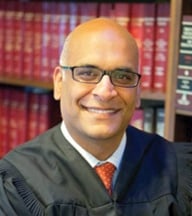
 By Judge Ketu Shah
In these turbulent times, we face choices about how we want to exist as a civil society. When faced with real world budget limitations and reductions of services, we are presented a society that will function very differently than before. We are faced with the reality that services for orderly resolution of disputes and access to courts will be severely limited. It is a harsh and stark reality that can have devastating implications to the public we serve.
Everyone one of us makes daily choices of what we want to do and what can we do. Sometimes those goals align, but sometimes they do not and we have to make uncomfortable choices. Growing up in an immigrant family, we often did not travel during winter or spring breaks (except for car trips to dams in Eastern Washington because my father was an engineer and it was inexpensive to have a picnic by the dam!). We saved and used coupons to ensure we kept every penny we could. We made choices and sacrifices to ensure our family was secure and stable. These lessons stay with me because it allowed us to be independent and when urgent choices were necessary, we had the means to make them. My grandmother passed away unexpectedly at a very young age, and my mother was heartbroken. My mother had not seen her for about 3 years so we quickly purchased airplane tickets for us to attend the funeral. This was very expensive at the time, but necessary for the family to heal and be together. We were able to do this because of the choices we made.
As a County, we are faced with difficult choices ahead. As you may have heard, the County is indicating the Court will need to cut $15.5 million and DJA will need to cut $4.7 million from our biennium budget. This would amount to an 11% cut and 7% cut respectively. These cuts would have devastating impacts to the people we serve. It would mean unrepresented folks would not be able to access our courts because the staff at the clerk’s office and the Court would be substantially reduced. Severe measures are being considered including reducing the hours that clerks are available at the front counter or to answer phones. We would no longer be able to conduct hearings virtually which would mean more defaults and bench warrants. It will mean delays in cases being heard because dockets are full. It will mean less support and supervision of youth to help them rehabilitate and reintegrate into our society. It will mean families would not get assessments to determine where children should be placed and under what supervision. It will mean weapons surrenders will take longer because calendars will not be managed. It will mean ex parte guardianships and probate matters will not be supported. It will mean unlawful detainers and civil protection orders will be delayed.
It will mean the breakdown of orderly resolution to cases. This chaos will lead people towards frustration because they cannot turn to the Courts for relief on matters required by law. For example, guardians for some of our most vulnerable in the community (minors, elderly adults, disabled adults) are required to give account of how they spent monies either every year or every three years. Often family members act as guardians and file these reports themselves with standardized court-created forms provided by the clerk’s office. They then need to get on the Court’s docket either through e-filing or in person. This process is complicated and without assistance for the unwary, mistakes will be made and cases will be dismissed. If there is no support, many people will be frustrated and simply not fill out the required paperwork and there will be no oversight of folks who are incapable of taking care of themselves. This sort of chaos will eventually lead to tragic results.
Ultimately, judges will be available to hear cases, but how long it takes to get to individual officers will be affected. There will be procedural delays that will result in cases being dismissed or delayed to an extent where they will be abandoned. We had that situation with Unlawful Detainers until we applied more resources resulting in better timely resolutions. If we eliminate those resources, it will mean a return to this overwhelmed and chaotic system. Our Court system has always been under resourced. In 2008 we had approximately 400 employees and today we have about 320 employees, about a 20% reduction despite an increase in population and an increase in mandated responsibilities by the Legislature. We have become extremely efficient with e-filing, case management, and virtual technology. We have also added judicial officers which has allowed continued access to our courts but without the supporting systems and staffing, that access will be delayed and compromised.
Our funding crisis is a function of choices we have made over many years. And, it directly implicates the independence of the judiciary. In the early 90s, we had a crisis at the courts with a huge backlog of cases. Civil cases took several years to get to trial, family law cases languished, and criminal cases were constantly on the hunt for an available court while defendants waited in custody. We came together as a community and determined this was unacceptable. The Court demanded funding to orderly process cases and we committed to using those funds efficiently. When those funds did arrive, we re-organized our departments into Civil, Criminal, Juvenile, and Family. We actually reduced employees but used technology for case management principles, for court records and reporting, and to track and monitor cases to ensure they kept moving forward. We did more with less. With these improvements and efficiencies over time, we cut down civil case time to trial to under 1 year. We reduced the number of pending family cases so families could receive closure and move on with their lives. And we reduced the number of days defendants remained in custody at our local jail which resulted in substantial county savings. We diverted juvenile cases and managed thousands of cases with a few dollars of investment in software, IT support, computers, and staffing to organize and route cases to appropriate departments.
Every step we took we kept in mind using public funds efficiently, and to provide timely access to our courts. This increased trust and confidence in the judiciary allowed people to have faith in good government and civil society. If we make choices that undercut these principles, we are sowing cynicism and distrust. Our court institution and our independence depends on having adequate resources. By reducing those resources, we diminish our courts and we diminish our society.
As always, we welcome feedback and conversation on how our court can serve the King County Bar and the members of our community. Please reach out to further that conversation.


