From the Desk of the Presiding Judge: Navigating Public Defender Case Standards and Legal Challenges
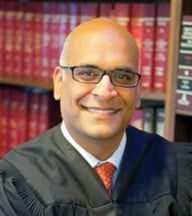
By Judge Ketu Shah
Some of you may know that I like to play cards. I play Pinochle, Euchre, Hearts, Rummy, Cribbage and many others. I have a Cribbage App on my phone which I often play to relax and turn my brain off. It is a way for me to focus my attention away from emails, texts, and all the other daily pressures we face. The irony is I have I played over 1700 games and have won only 54% of them (of course the app tracks your stats!). I made concerted efforts to increase the win percentage to get to 60% but the algorithm is too smart and only lets me win enough to keep me interested, but not so much that I get bored and move onto something else. I know many of you play games like Soduku or Crossword puzzles that similarly make it very difficult but not so difficult to occasionally complete the puzzle. The challenge keeps enticing us to come back again and again. In many ways, our brains are wired to keep trying in the hope that we will have success even when faced with the reality that we will never be as successful as we want to be. The real question is why do we keep doing it when we know many times the result will lead to failure. This human condition is what the myth of Sisyphus teaches us. We keep pushing the boulder up the mountain even when we know it will roll right back down.
Currently, there is a debate about case standards for public defenders that is in the rule making phase with our Supreme Court. In 2012, case standards were established for indigent defense but now based on new studies and complexity of cases, those standards are antiquated. Coming out of the pandemic, there was a huge backlog of cases and all stakeholders were overwhelmed, including the courts. Our Executive and County Council supported the court and stakeholders with Covid funding to help us hire temporary judicial officers, staff, and technology to work through that backlog. Stakeholders imposed their wills and worked cooperatively to resolve and move cases through the system.
But this was also a time of tectonic shifts in our labor force. Many public sector employees left; ones who had years of experience and expertise to deal with the most complex cases. Our local Department of Public Defense and the Prosecutor’s Office lost many people to retirement, job changes, and burnout. The folks who remained inherited some of the most complex Class A felony cases including murders, assaults with guns, and sexual assaults. Hiring could not keep up with the caseloads and now the number of attorneys handling these cases are overwhelmed. Additionally, with the increase of video, digital, and forensic evidence, and our better understanding of brain development, the time to prepare for trial has increased tremendously.
All of these factors, e.g. shortage of attorneys, complicated cases, and lack of experience, have led to studies and ultimately the Washington State Bar Association’s recommendation to reduce public defender caseloads. What is important to acknowledge, and I witnessed this firsthand when I was the Chief Criminal Judge, is that Public Defenders and Prosecutors are under an incredible amount of stress. The idea to change case standards is a noble endeavor but like many issues, there are other connected implications that effect the entire system. There are cost issues for counties and capacity issues for courts. Another issue is recruitment of attorneys to do this work. Whatever the standards are, we will still need bodies to do the work either before the standards are met, or after the standards are reached and a public defender indicates they cannot take on any more cases. This problem is acute in some areas of the State where there are legal deserts. What remains is the right of an indigent individual to have an attorney and it is our constitutional obligation to provide one.
We will need our collective legal expertise to solve this dilemma that folks accused of crimes absolutely have the right to counsel and the tension of not enough bodies to do the work. What ideas we apply to this problem can vary from more funding, to make the job more enticing, to encourage careers in public service, and/or creating panels of private attorneys to take on extra cases much like the Federal system. All of these suggestions have merit and drawback but we must meet the challenge and find solutions that can work.
Why does this sound so familiar? Maybe this is a function of my age, but from time to time, the government has pressures to meet its obligations. Sometimes that manifests itself in budget pressure, and sometime there are constitutional tensions that require us to fund certain basic rights. Several years ago, it was public education through the McCleary decision. Decades ago, it was denial of counsel that led to Gideon. The government lacks resources and constitutional requirements demand better. We have heard this story before. At times it feels like Sisyphus trying to roll the rock up the mountain but there will always be limits to our public resources and there will always be a need. What we can do is continue to constructively engage and find solutions, and if those do not work, try something else. What we cannot lose sight of is the rule of law is important — very important. If we have challenges, we must work together to help others. That is the definition of legal service … the definition of public service. Keep trying to help others.
There is an open comment period on case standards until October 31, (Comments can be directed to supreme@courts.wa.gov) and there will be public hearings on the subject. The WSBA and Council on Public Defense made recommendations after conducting public hearings.
As always, we welcome feedback and conversation on how our court can serve the King County Bar and the members of our community. Please reach out to further that conversation.


