By Gabriel S. Galanda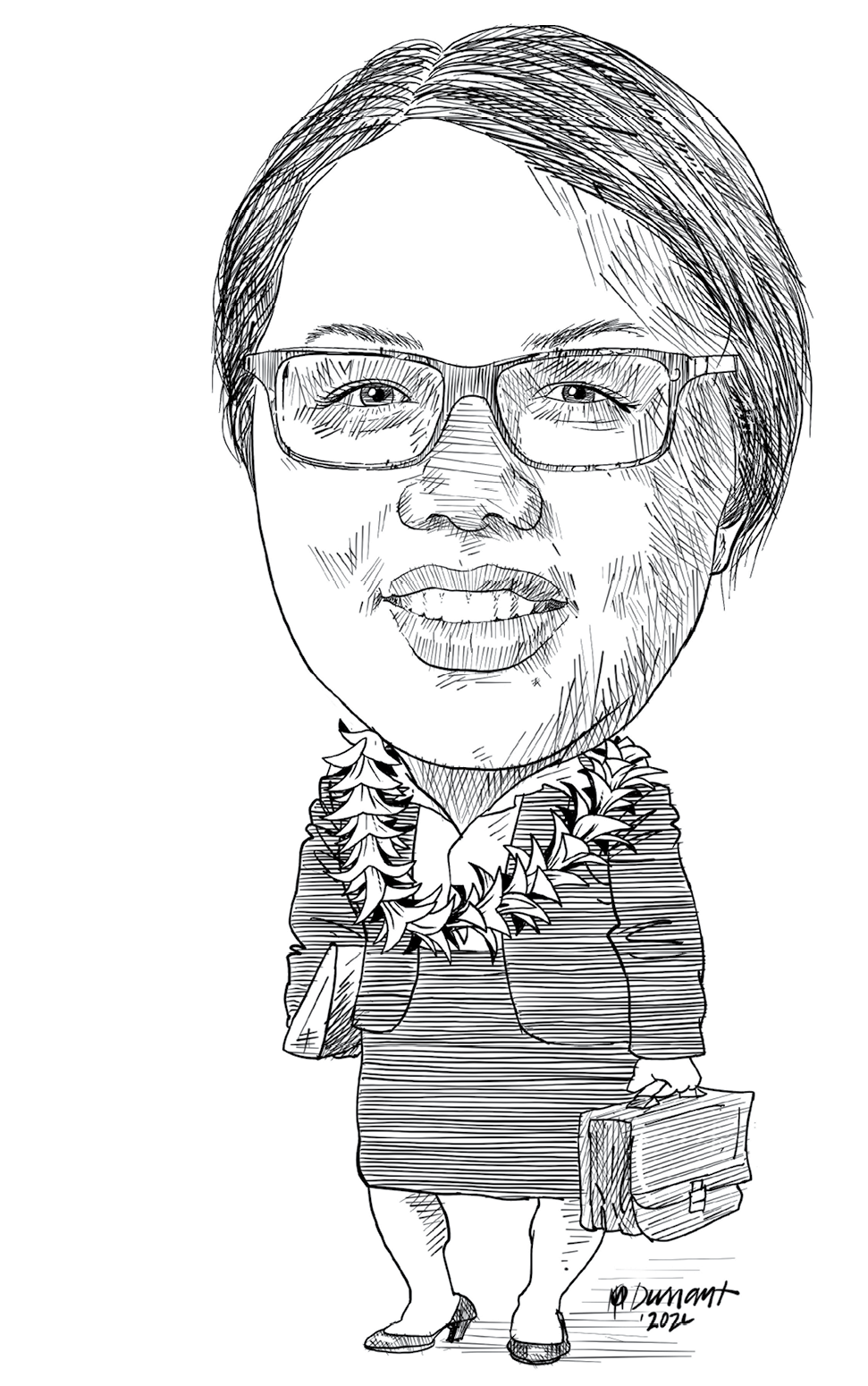
Native Hawaiian stories incorporate the mo‘o kū‘auhau (genealogy) of people and places, often beginning with ‘ōlelo no‘eau (proverbs). This story spotlights a 40-year-old Native Hawaiian, Appalachian Scotch-Irish, tech-IP-Indigenous-rights lawyer practicing in King County: Makalika Naholowa‘a. With Makalika’s guidance, the story is presented in a Hawaiian way, with Hawaiian concepts as well as Appalachian ‘ōlelo no‘eau passed down in her ‘ohana (family).
‘Ohana – Family | Mo‘o kū‘auhau – Genealogy | Kulāiwi – Native/ancestral land | One Hānau – Birthplace
“Have the common sense
God gave a milk cow.”
Makalika was born the hiapo (first child) to her Native Hawaiian parents. Her dad was Bert Allen Naholowa‘a, the only son of Bertrand Naholowa‘a of Honolulu, O‘ahu and Rugy Egan Naholowa‘a of Kingsport, Tennessee. Her mom is Margaret Ka‘awa Galas Naholowa‘a, the daughter of Joanna Naki Pi‘iali‘i of Mana‘e, Moloka‘i and Macario Galas of the Philippines, who worked for some years in Hawai‘i before returning to Asia.
Bert was born at Fairchild Air Force Base outside of Spokane. He was the first person in his Hawaiian lineage born outside of Hawaii. When Bert was two years old, his dad Bertrand Naholowa‘a died with 100 other people on a flight that left McChord Air Force Base for Anchorage but instead landed at sea. Kanaloa (the god of the sea) took him. Bert’s mom Ruby was never again “quite right.” She married another airman, from the south. Bert’s mixed-race family was deemed negro by many and refused service by some in Appalachia.
Acceptance in any direction of life was a challenge, but Bert accepted himself for who he was and embraced colorful Appalachian lifeways and expressions from his mom and stepdad and his mamaw (grandma) Callie McQuillen Egan. When Makalika was born twenty years later, she witnessed her dad’s proud mixed-race hillbilly culture, especially through mealtime stories over cornbread and rice.
Makalika’s mom Margaret was born on the ‘āina, like all the women before her in her mo‘o kū‘auhau, and was raised by Hawaiians. Margaret’s kulāiwi (ancestral home) is her one hānau (birthplace). Her life has been steeped in Hawaiian lifeways. Her marriage to Bert was the product of prayer for a white Hawaiian partner, which was an image of goodness proposed to her throughout her childhood. Margaret was the first generation of “State of Hawai‘i” Hawaiians. There is no Hawaiian word for this — for a generation of Hawaiians told to only speak English and to be ashamed of Hawaiian identity, and instead to be “good Americans.”
Bert and Margaret met in their shared kulāiwi, Hawai‘i, and after several moves, raised Makalika and her four siblings in rural Arizona. Margaret’s children are gifts from Akua (God). She says their purpose is to serve the Lord and all they ever truly need is “more Jesus,” which Makalika recounts humorously.
Kūlana – Role | Mākaukau – Prepared, ready | Na‘au – Gut knowledge, ancestrally influenced
“There ain’t no shame in being poor. Be ashamed of being dirty.”
Makalika’s first job was to care for her mom and four siblings. Starting at a very young age, she cleaned and babysat and, unfortunately, endured domestic violence. Hawaiians believe that all people have Hina and Ku energies, creative feminine and destructive masculine capacities. Ku-like forces of mental illness often overtook her dad. He was at times gregarious and brilliant, but was at other times unstable and dangerous. Makalika supported her mom in her efforts to create safety and balance in the home.
Like too many Indigenous households and families plagued by mental illness without support, Makalika’s family lived near the edge of houselessness, in dilapidated trailers and dependent on food welfare. But she learned to not feel shame for being financially poor. She learned poverty is not something you can always control. She accepted that both her Hawaiian and Appalachian ancestors performed hard, physical work that often resulted in little physical wealth.
Instead of money, Makalika was taught to value what you can control, including cleanliness, hard work, faith, and family loyalty. She also learned that one must try to not be useless, which in Hawaiian is more often framed in the positive. The teaching means to be generally ready for what life requires (mākaukau) and to kōkua (help) however you can with whatever needs doing.
As Makalika grew, her caretaker hiapo (first born) role evolved, and her kuleana became lifting her ‘ohana out of poverty as rapidly as possible. Deemed a highly capable student, she focused on education and every enrichment program accessible to indigent youth in Arizona. She graduated high school at age 16. She earned a degree in computational mathematics with honors by 20, and immediately started a job working for IBM in Texas, where she first learned about careers in Big Tech and life in the middle class. She struggled to feel like she belonged in either setting.
When IBM sold her group to an international buyer, Makalika shifted gears, towards teaching. The then-recently enacted federal No Child Left Behind Act and resulting state educational standards made that easily possible. Public schools in the economically-depressed majority-Black parts of Dallas, where she lived, struggled to find high school math teachers who were “highly qualified” under the new federal regulations. Makalika met the standard, and was happy to serve her minority students from low income families.
But in that role she noted the difficulties her students and colleagues faced in an educational system myopically focused on test performance, rather than student needs, equity, and educational or workforce readiness. Witnessing the impact of that federal law and systems that perpetuated inequity, she felt compelled to learn how the legal system worked and could be changed for the better. Makalika shifted gears again, by investigating law school.
After studying law school admissions for about a year, Makalika was admitted to Columbia Law School and moved to New York City with her husband Alex. She studied the law relating to technical innovation and Indigenous rights, and left convicted that Native people needed expertise in both areas. After finishing law school, her na‘au (gut instincts) pointed her to Washington as a place to raise and provide for her young family and to do good. Thanks to the generosity of folks at Perkins Coie in Seattle, she got her first lawyer job.
Kuleana – Responsibility &
Privilege | ‘Onipa‘a – Steadfast
“Act like you’ve been raised right.”
Makalika is barred in both Washington state and Hawai‘i and will have practiced law for fourteen years this fall. She has navigated the profession, and life, guided by the tenets of her complex cultural heritage and the kūlana (roles) and kuleana (responsibilities) she holds as a result of that heritage. Though her career has evolved, she has steadfastly focused on uplifting marginalized communities, especially Indigenous people, to whom she feels the greatest kuleana.
Since 2014, she has served on the board of the National Native American Bar Association (NNABA), an organization that represents the scant 0.5% (one-half-of-one-percent) of the legal profession who are Native. Through NNABA, she learned Native community organizing skills and how to be a Native law and policy advocate, while calling for inclusion and respect for civil and Native rights alongside storied pathbreakers in Indigenous America.
In 2022, Makalika’s peers elected her NNABA President. She completed her term in April, having elevated the organization to unprecedented heights. Under her leadership the organization celebrated its 50th anniversary; co-published the first ever national study on the experiences of Native women attorneys; and launched several initiatives, including its first-ever summit for Native public safety attorneys, a summit on Native voting rights, and the creation of the Justice is Medicine awards. She also led NNABA’s participation in the U.S. Patent and Trademark Office’s first ever tribal consultation regarding Indigenous human rights and intellectual property.
I have been affiliated with NNABA for nearly 25 years and nobody has accomplished more for NNABA as its President than Makalika.
Makalika has also advanced and accomplished Native inclusion and justice wherever she has practiced. After working at Perkins Coie, Makalika moved to Microsoft. She initially served in the company’s trademark group, which she eventually lead and managed, and later became the chief of staff for the company’s general counsel. She may be the first Native person to ever lead an intellectual property team in a Fortune 500 company, and still today is one of less than twenty known Indigenous lawyers in the country who practices in intellectual property.
In her corporate role, Makalika worked on amicus efforts to challenge the Washington, DC NFL team’s R*skins trademark. She co-led and hosted annual events that brought coalitions of national affinity bars together for joint lobbying. She served on committees that developed diverse legal pipelines through summer internship programs. She worked on projects to build business for minority, aspiring law firm partners. She managed the team at Microsoft that set policies and protocols for law firm procurement and co-managed a refresh of the financial incentive program that rewarded diverse and inclusive legal teams among outside counsel.
In all that she does, Makalika is ‘onipa‘a (steadfast) in her service and leadership — in both thought and action.
Pau Hana – Finished Work |
I mua – Move ahead | Lāhui – the Hawaiian People/Nation
“If the Lord’s willing and
the creek don’t rise.”
During the pandemic, Makalika was led by her na‘au to live in Hawai‘i for the first time in her life. Although her plan was to continue working remotely for Microsoft, she was soon called to a new job: Executive Director of the Native Hawaiian Legal Corporation (NHLC), a Honolulu-based non-profit organization dedicated to the practice of Native Hawaiian law and protection of Native Hawaiian rights.
After ten years of admiring the organization for its courage and commitment to serving her people’s legal needs, she was called to her kulāiwi when the existing Executive Director took a role working for the U.S. Interior Department Secretary. NHLC turned to Makalika.
Makalika tells me Hawaiians don’t believe in serendipity. They believe that if you listen, ancestors guide you to where you are supposed to be. Makalika has served in that kūlana (role) for nearly three years.
This August, NHLC will turn 50 years old. Its mission is to protect and advance Native Hawaiian identity and culture through advocacy and legal practice. Makalika manages the nine-lawyer organization, which at any given time handles more than 100 open disputes, and responds to hundreds of Native Hawaiian requests for legal assistance annually.
NHLC serves Native Hawaiians from cradle to grave, from matters to avoid the removal of Hawaiian children from their families by Child Welfare Services, to protecting traditional Hawaiian burial sites and practices, and to sustain Hawaiian lifeways in between.
Under Makalika’s leadership, NHLC has launched new programs and initiatives, expanded services, reorganized, moved its headquarters in Honolulu, and opened a new office on the island of Hawai‘i. She also led the organization’s response to one of the deadliest wildfires in American history that destroyed Lahaina, one of the most historically significant towns in all the Hawaiian islands.
NHLC is currently collaborating with Makalika’s former firm Perkins Coie and the Center for Reproductive Rights to challenge a 2019 Hawai’i state law that criminalizes traditional Hawaiian birthing practices, in violation of state constitutional protections for Native Hawaiian traditional and customary practices. With many diverse and ever evolving legal issues facing Hawaiian people, NHLC’s hana (work) will never be pau (finished). The organization is dedicated to move forward with the lāhui (Hawaiian people) to achieve justice and perpetuate Hawaiian lifeways.
Makalika is charting the exact same course in her own career, and life, from both parts of the Pacific where she now shares her time. Imua (onward).
Gabriel S. Galanda is an Indigenous rights lawyer and the managing lawyer of Galanda Broadman, PLLC.


